

On Dec 17, 2025, Miami Public Schools received an email from Jon Reid, Environmental Programs Manager (Voluntary Cleanup/Chemical Reporting) with the Land Protection Division at the Oklahoma Department of Environmental Quality (ODEQ), regarding testing on Nichols’ land. We will share additional information as it becomes available.
“DEQ has strong evidence from 2000 through 2009 that benzene from the former BF Goodrich Plant was never present in the groundwater near the adjacent Miami Head Start or Nichols Elementary School. DEQ suggests,
before proposing any off-site sampling, first determining whether benzene or other volatile organic compounds from the site could have reached the eastern facility boundary since 2009 via groundwater movement or ambient air movement.
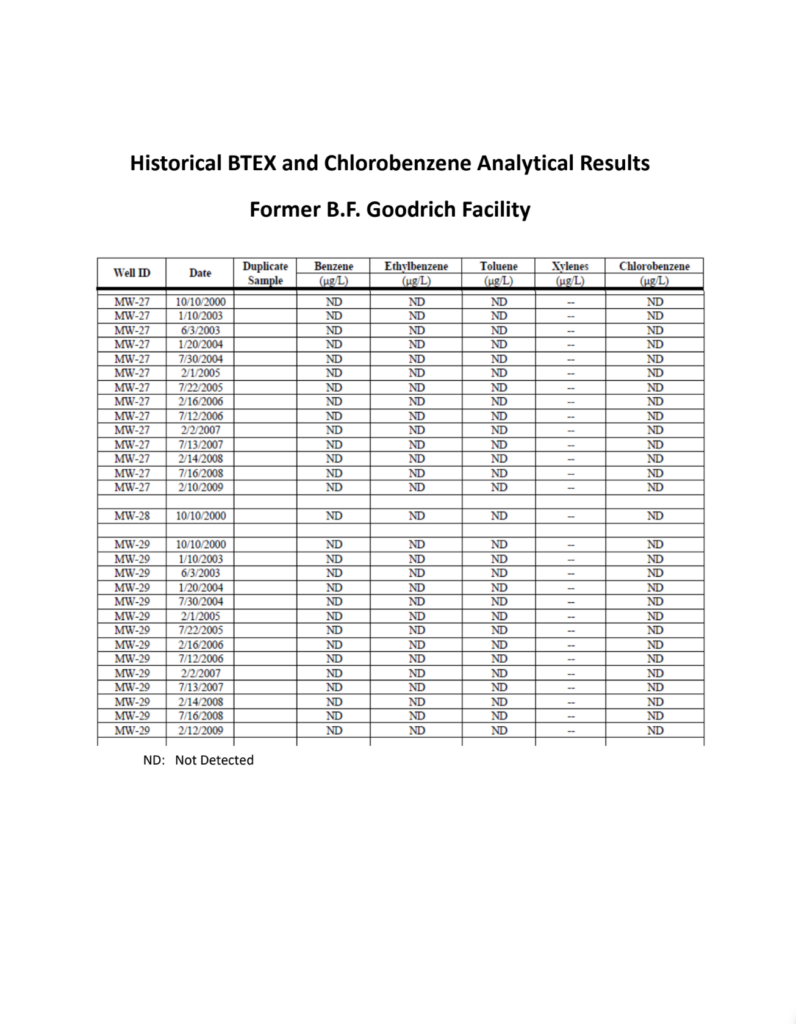
Data from three wells located on the eastern boundary of the facility is shown in the attached table
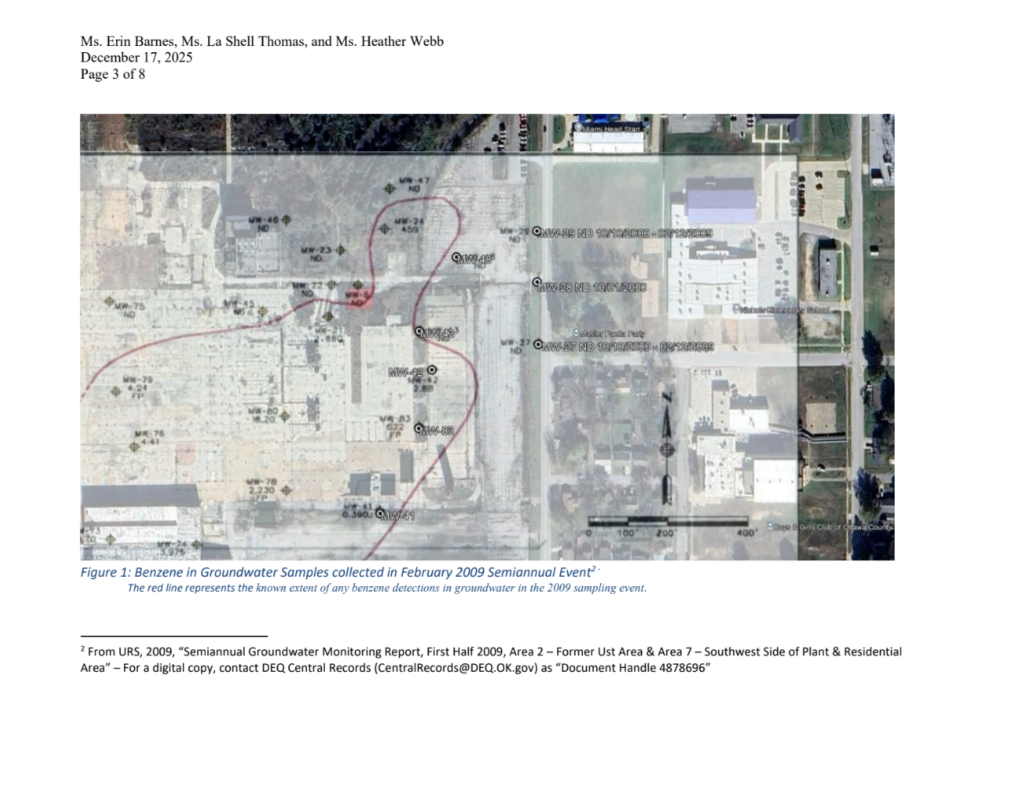
labeled “Historical BTEX and Chlorobenzene Analytical Results.” These wells were nearest to the present-day Miami Head Start and Nichols Elementary School and are shown in Figure 1 as Monitoring Wells MW-27, MW-28, and MW-29. Figure 1 and the table show that benzene, toluene, ethylbenzene, xylenes (BTEX), and chlorobenzene were consistently below the laboratory detection limit in these wells from 2000 until 2009, when DEQ allowed Michelin to drop these from the monitoring network based on the results. In 2015, DEQ approved Michelin’s request to plug and abandon those three wells. Figure 1 also shows the known extent of any benzene
detections in groundwater in 2009.
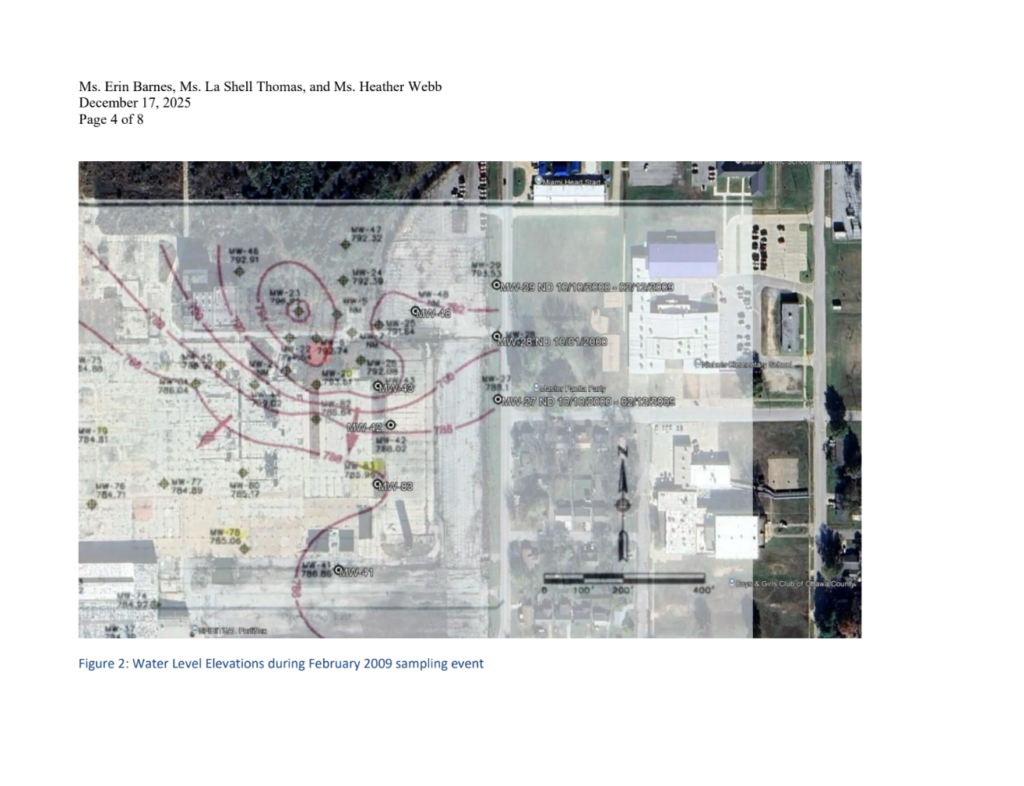
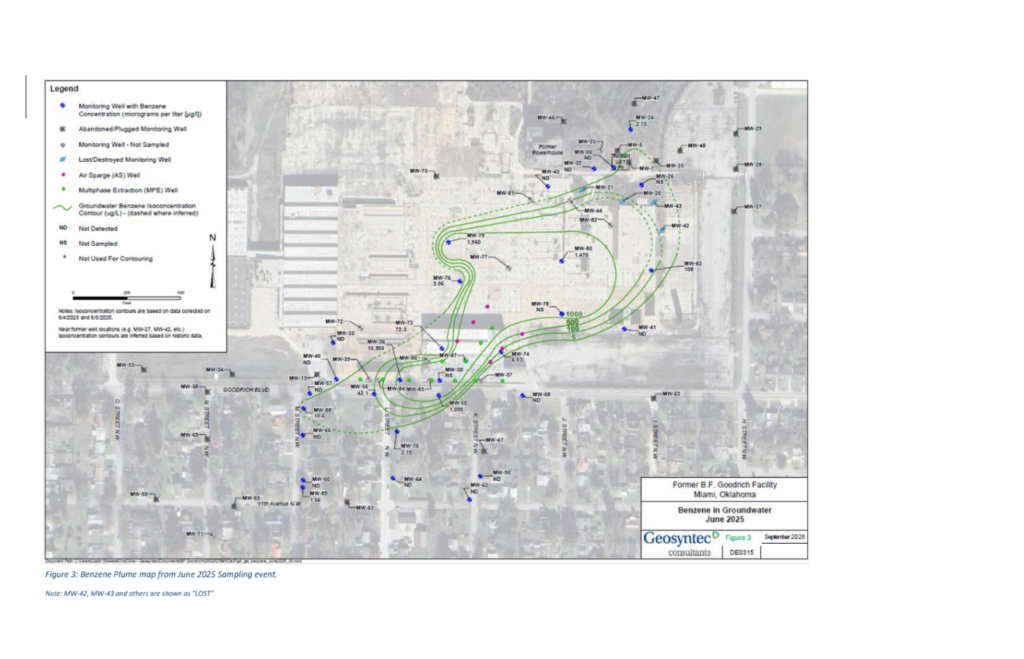
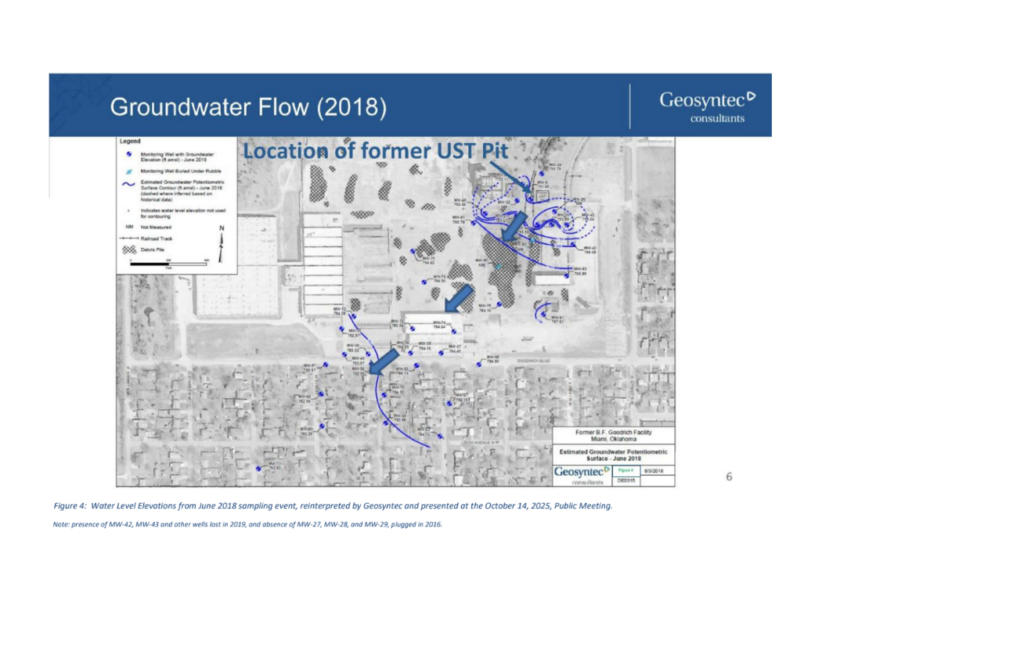
As shown in the distribution of dissolved benzene in 2009 (Figure 1) and in 2025 (Figure 3), benzene is not present in the groundwater outside of the areas identified in those figures. Figure 2 shows the water level elevations in 2009. The groundwater containing dissolved benzene was demonstrated to flow to the south-southwest, not towards Miami Head Start or Nichols Elementary School, and the plume was defined. The data showed that the groundwater containing benzene was moving away from the nearby Head Start and the Nichols Elementary School.
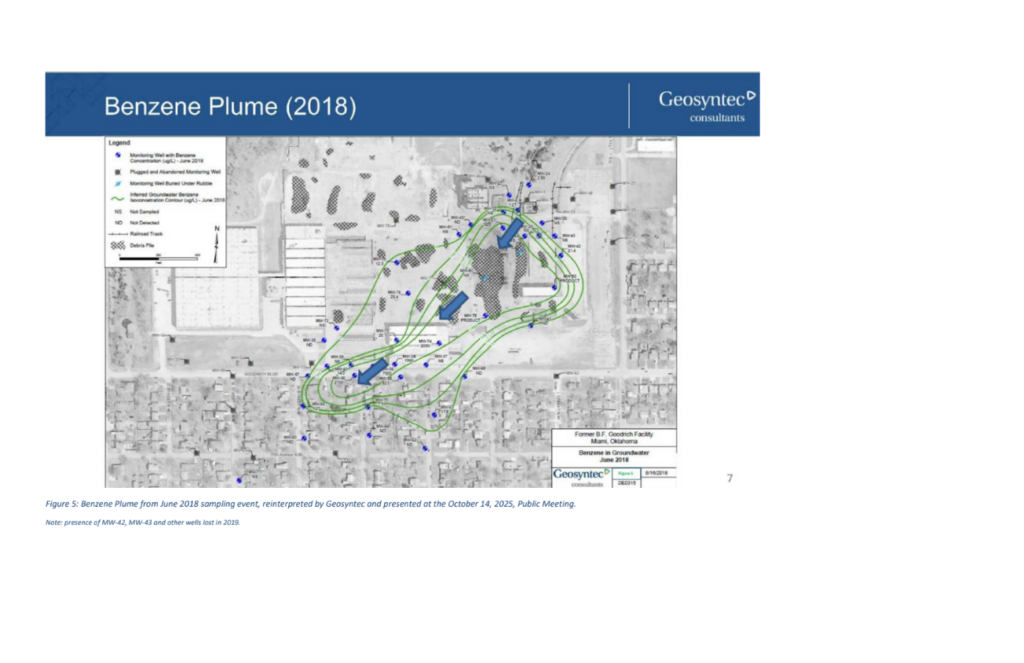
In 2019, two wells closer to the leading edge of the plume and used to define the northeast limit of the benzene plume (MW-42 and MW-43) were lost during an EPA removal action. Those two wells were last sampled in 2018 (Water level Elevations in Figure 4 and Benzene Plume in Groundwater in Figure 5), and the 2018 results remained consistent with the 2009 findings. DEQ considers it beneficial to replace the plugged wells (MW-27, MW-28, and MW-29) and provide assurance the plume is still not migrating to the northeast or east. Therefore, DEQ is asking Michelin to propose locations on-site for sentinel wells and a gauging and monitoring schedule for this purpose. DEQ will provide you updates on the well installation, well sampling, and results that follow.
DEQ Air Quality Division is examining the ambient air dispersion pathway for exposure to treated air released from the groundwater remediation system, and DEQ will provide the results to you separately.”